
How Private Wealth Management Helps Navigate Economic Uncertainty sets the stage for this enthralling narrative, offering readers a glimpse into a story that is rich in detail with casual formal language style and brimming with originality from the outset.
Private wealth management plays a crucial role in times of economic uncertainty, providing individuals with tailored strategies to protect and grow their wealth amidst turbulent financial climates.
Importance of Private Wealth Management in Uncertain Economic Times
In times of economic uncertainty, private wealth management plays a crucial role in helping individuals navigate through financial challenges and mitigate risks effectively. With the expertise and personalized approach offered by wealth managers, individuals can create a strategic plan to safeguard their assets and investments.
Strategies to Mitigate Financial Risks
Private wealth management employs various strategies to mitigate financial risks during turbulent economic periods. Diversification of investments, asset allocation, and risk management techniques are some of the key strategies used to ensure a balanced and resilient portfolio. By spreading investments across different asset classes, industries, and regions, individuals can reduce the impact of market downturns and enhance overall portfolio performance.
Benefits of Personalized Wealth Management Plan
Having a personalized wealth management plan tailored to address economic uncertainties offers numerous benefits. Wealth managers work closely with clients to understand their financial goals, risk tolerance, and unique circumstances. This customized approach enables individuals to make informed decisions, adapt to changing market conditions, and optimize their financial strategies based on their specific needs and objectives.
Strategies Used in Private Wealth Management for Economic Uncertainty
Private wealth managers employ a variety of strategies to navigate economic uncertainty and protect the wealth of their clients. These strategies are designed to minimize risks and maximize returns in a volatile market environment.
Short-term vs. Long-term Investment Approaches
In times of economic uncertainty, private wealth managers may choose between short-term and long-term investment approaches. Short-term strategies focus on capital preservation and liquidity, aiming to protect assets during periods of market instability. On the other hand, long-term strategies prioritize growth and are geared towards achieving financial goals over an extended period, despite fluctuations in the market.
By combining both short-term and long-term investment approaches, wealth managers can create a balanced portfolio that can withstand economic shocks.
Diversification, Asset Allocation, and Risk Management
Diversification is a key strategy used by private wealth managers to mitigate risks associated with economic uncertainty. By spreading investments across different asset classes, sectors, and geographic regions, wealth managers reduce the impact of market downturns on the overall portfolio.
Asset allocation involves strategically dividing investments among various asset classes, such as stocks, bonds, real estate, and alternative investments, based on the client's risk tolerance and financial goals. Risk management techniques, including hedging strategies and the use of derivatives, are also employed to protect wealth from potential losses in turbulent market conditions.
By combining diversification, asset allocation, and risk management, private wealth managers aim to achieve a balance between risk and return for their clients.
Role of Financial Advisors in Private Wealth Management during Economic Uncertainty
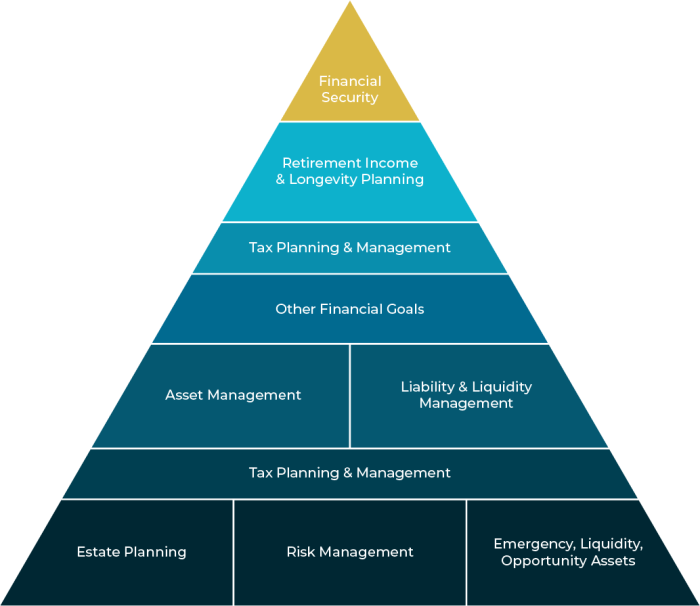
In times of economic uncertainty, the role of financial advisors in private wealth management becomes crucial. These professionals play a vital role in guiding clients through turbulent times and helping them navigate the complex financial landscape with confidence.
Assessing Risk Tolerance and Financial Goals
Financial advisors assess their clients' risk tolerance levels and financial goals to create personalized wealth management strategies. By understanding how much risk a client is willing to take and what their long-term financial objectives are, advisors can tailor their advice to help clients achieve their goals while managing risks effectively.
- Financial advisors use risk assessment tools and questionnaires to gauge an individual's risk tolerance accurately.
- They help clients set realistic financial goals based on their risk profile, time horizon, and investment preferences.
- By aligning investments with clients' risk tolerance and objectives, financial advisors can create diversified portfolios that balance risk and return.
Market Conditions and Informed Decision-Making
Financial advisors stay abreast of market conditions, economic trends, and regulatory changes to provide informed advice to their clients. By analyzing market data and economic indicators, advisors can adjust investment strategies and asset allocations to mitigate risks and capitalize on opportunities during uncertain times.
- Advisors monitor market volatility and economic developments to make timely adjustments to clients' portfolios.
- They educate clients on the potential impact of economic events on their investments and recommend appropriate actions to safeguard wealth.
- Through regular communication and updates, financial advisors empower clients to make well-informed decisions that align with their financial objectives.
Collaborative Relationship with Clients
Financial advisors foster a collaborative relationship with their clients, working together to make sound financial decisions during periods of economic uncertainty. By providing guidance, expertise, and support, advisors empower clients to stay focused on their long-term financial goals and navigate challenges with confidence.
- Advisors engage clients in discussions about market conditions, investment strategies, and risk management to ensure alignment with their financial goals.
- They offer personalized advice and recommendations based on clients' individual circumstances, preferences, and objectives.
- Through proactive communication and regular reviews, financial advisors help clients stay on track and adapt to changing market dynamics effectively.
Incorporating Technology in Private Wealth Management for Economic Uncertainty
Technology plays a crucial role in modern private wealth management, especially during times of economic uncertainty. By leveraging tools such as AI algorithms and data analytics, wealth managers can make more informed decisions to navigate volatile markets and optimize investment strategies.
Digital Tools and Platforms in Wealth Management
- Robo-Advisors: Automated investment platforms that use algorithms to create and manage portfolios based on clients' risk tolerance and financial goals.
- Data Analytics Software: Tools that analyze market trends, historical data, and economic indicators to identify investment opportunities and risks.
- Portfolio Management Apps: Mobile applications that allow clients to monitor their portfolios in real-time, track performance, and receive alerts on market changes.
- Risk Management Software: Platforms that assess and mitigate risks by conducting stress tests and scenario analyses to protect investments from market downturns.
Benefits and Challenges of Integrating Technology
- Benefits:
- Enhanced Decision-Making: Technology provides real-time data and insights, enabling wealth managers to make timely and strategic decisions.
- Efficiency and Cost-Effectiveness: Automation of tasks and processes reduces manual workloads and operational costs, improving overall efficiency.
- Personalization: Digital tools allow for personalized investment strategies and tailored recommendations based on individual client preferences.
- Challenges:
- Data Security and Privacy Concerns: The use of technology raises cybersecurity risks and client data privacy issues that need to be carefully managed.
- Adoption and Training: Wealth managers need to adapt to new technologies and undergo training to effectively utilize digital tools in their practice.
- Overreliance on Technology: There is a risk of overreliance on algorithms and automation, which may overlook qualitative factors and human judgment in decision-making.
Final Summary
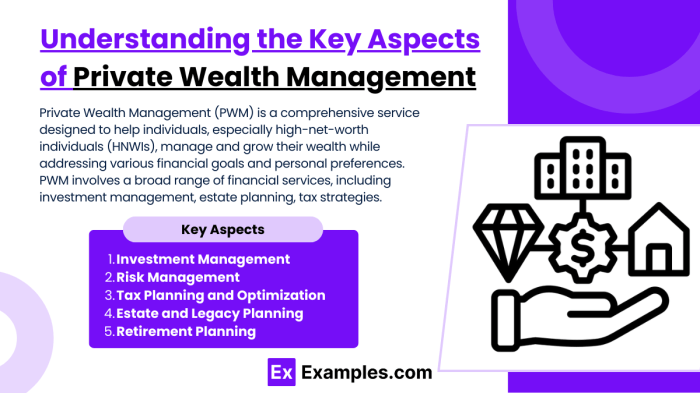
In conclusion, the realm of private wealth management offers a beacon of hope in navigating economic uncertainty, guiding individuals towards financial stability and prosperity. By embracing personalized strategies, leveraging technology, and fostering collaborative relationships with financial advisors, individuals can weather the storm of economic challenges with confidence and resilience.
FAQ Insights
How can private wealth management help individuals during economic uncertainty?
Private wealth management provides personalized strategies to mitigate financial risks, optimize investment decisions, and navigate turbulent economic conditions effectively.
What are some common investment strategies used by private wealth managers?
Private wealth managers often employ diversification, asset allocation, and risk management techniques to safeguard wealth and maximize returns during economic instability.
How do financial advisors assist clients in private wealth management?
Financial advisors assess risk tolerance, financial goals, and market conditions to offer tailored wealth management advice, guiding clients through uncertain economic times.
Why is technology integration crucial in private wealth management?
Technology enhances decision-making processes by leveraging AI algorithms, data analytics, and digital tools to monitor portfolios, analyze trends, and optimize investment strategies for navigating economic uncertainties.